Planning for unplanned maintenance: The case for advanced optimization tools
It’s early Tuesday morning with operations moving according to plan when you receive a notification that six tails need to be pulled from service as part of the Pratt & Whitney Geared Turbofan (GTF) inspection issue. This will have a broad impact affecting multiple routes and potentially displacing hundreds of passengers. You get to work to find an immediate solution that minimizes disruption to the existing schedule, crew, and passengers.
You begin the process of manually de-assigning flights, finding alternative aircraft options, assigning those aircraft with older, less fuel-efficient engines and ensuring you’ve covered as many routes as possible realizing two routes need to be canceled. You wonder if there’s a better way to solve these disruptive, costly scenarios when they arise.
There is a better, faster, automated way to solve scenarios like this one – Jeppesen Tail Assignment is an advanced optimization and analytics tool that helps airlines quickly and effectively mitigate the effects of large-scale, unplanned technical disruptions.
How can airlines ease the management of unplanned technical disruptions?
While large-scale events like this are difficult to predict, airlines can arm themselves with tools that help mitigate the operational impact. Traditional manual planning methods fall short when disruptions of significant magnitude strike. A modern digital optimizer will deliver the most efficient plan with the speed and accuracy needed when solving complexity at this scale.
Jeppesen Tail Assignment is an optimization tool engineered to address these exact challenges. It can do things humans can’t, in a short amount of time:
When an unplanned event occurs, such as a directive to ground multiple aircraft, Tail Assignment’s optimization engine recalculates the entire fleet schedule.
It evaluates millions of potential tail assignment combinations to identify the recovery strategy that minimizes disruptions, optimizes fuel consumption, and protects revenue.
The solution provides the option to create multiple scheduling scenarios using different numbers of available tails. For example, you can model the operational impact of losing 5-10% of the fleet.
The system can strategically reassign the remaining active aircraft to cover high-priority routes and syncs with other operational systems in real-time, minimizing the number of cancellations and mitigating the financial impact.
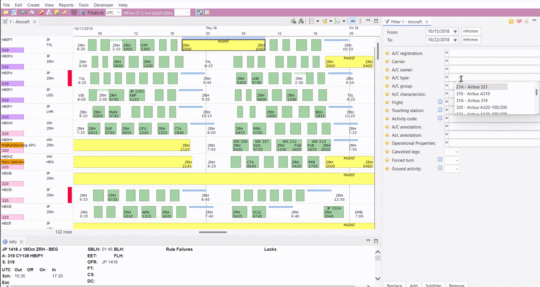
Figure 1- Here we see a filter being applied for a specific tail group.
Furthermore, by integrating with maintenance planning systems, Tail Assignment offers a forward-looking view of fleet health. It incorporates data on engine cycles, flight hours, and scheduled maintenance to create an optimized long-term plan. This allows planners to proactively and confidently schedule downtime, turning potential unplanned disruptions into managed events and ensuring that the operational impact is minimized. In a scenario where fleet availability is constrained, maximizing the utilization of every airworthy asset is paramount for operational resilience.
Key Takeaways
Large-scale, unplanned technical disruptions happen. Tail Assignment can help your airline address these situations with swiftness and confidence that the new plan will:
Mitigate the impact of fleet-wide events: Systemic issues can potentially ground a large portion of your fleet. Jeppesen Tail Assignment gives you the power to instantly recalculate your entire schedule, finding the best possible recovery plan in minutes, not hours. This ensures you can cover high-priority routes and minimize cancellations.
Protect your bottom line: The financial effects of unplanned downtime go beyond repair costs. Lost revenue, passenger compensation, and expensive short-term leases can add up quickly. By optimizing your remaining aircraft, Tail Assignment helps you protect revenue and control costs, turning a potentially catastrophic financial event into a manageable situation.
Optimize: Manual planning is no match for the complexity of modern airline disruptions. An advanced optimization tool like Tail Assignment is essential for building resilience. It allows you to analyze millions of scenarios to find the most efficient solution, ensuring you make the best decisions for your schedule, crew, and passengers.