
How Management by Exception helps flight operations teams cut through the noise
What is Management by Exception (MBE)?
Every day, airline operations teams make thousands of decisions under pressure—but the most important ones are often hidden in a sea of routine flights. Airlines manage hundreds, sometimes thousands, of flights daily, each with its own set of variables—weather, airspace restrictions, crew schedules, and more. Traditionally, dispatchers and operations teams have been tasked with monitoring every flight equally, regardless of whether it’s running smoothly or encountering issues. This approach is not only inefficient but also overwhelming, leading to missed opportunities to address critical problems in a timely manner.
Management by Exception (MBE) is a decision-making framework designed to solve this challenge. Instead of requiring teams to monitor every detail, MBE focuses attention only on deviations from the norm—flights that require intervention or are at risk of disruption. By highlighting exceptions, MBE allows teams to prioritize their efforts, reduce unnecessary workload, and improve overall efficiency.
The problem: Why traditional monitoring falls short
In traditional flight operations, dispatchers are often inundated with data. They must sift through information for every flight, manually identifying issues such as delays, weather disruptions, or regulatory violations. This approach creates several challenges:
- Information overload: Dispatchers are overwhelmed by the sheer volume of data, making it difficult to identify critical issues quickly.
- Inefficient resource allocation: Time and energy are wasted monitoring routine flights that don’t require intervention.
- Delayed responses: Critical issues may go unnoticed or be addressed too late, leading to operational disruptions and increased costs.
These inefficiencies are compounded in large-scale operations, where the number of flights and variables grows exponentially. This is where MBE becomes invaluable.
Why MBE is relevant today
Commercial airlines are under increasing pressure to operate more efficiently while maintaining safety and compliance. Airlines face challenges such as rising fuel costs, stricter environmental regulations, and heightened passenger expectations for on-time performance. In this context, MBE is more relevant than ever because it:
- Reduces operational complexity: By focusing only on exceptions, MBE simplifies decision-making for dispatchers and operations teams.
- Improves responsiveness: Teams can address critical issues faster, minimizing delays and disruptions.
- Enhances efficiency: Resources are allocated where they’re needed most, reducing wasted effort and improving overall productivity.
With the growing adoption of advanced technologies like AI and automation, MBE is no longer just a theoretical framework—it’s a practical, actionable strategy that can be implemented through tools like the Management by Exception Dashboard.
Introducing the Management by Exception Dashboard
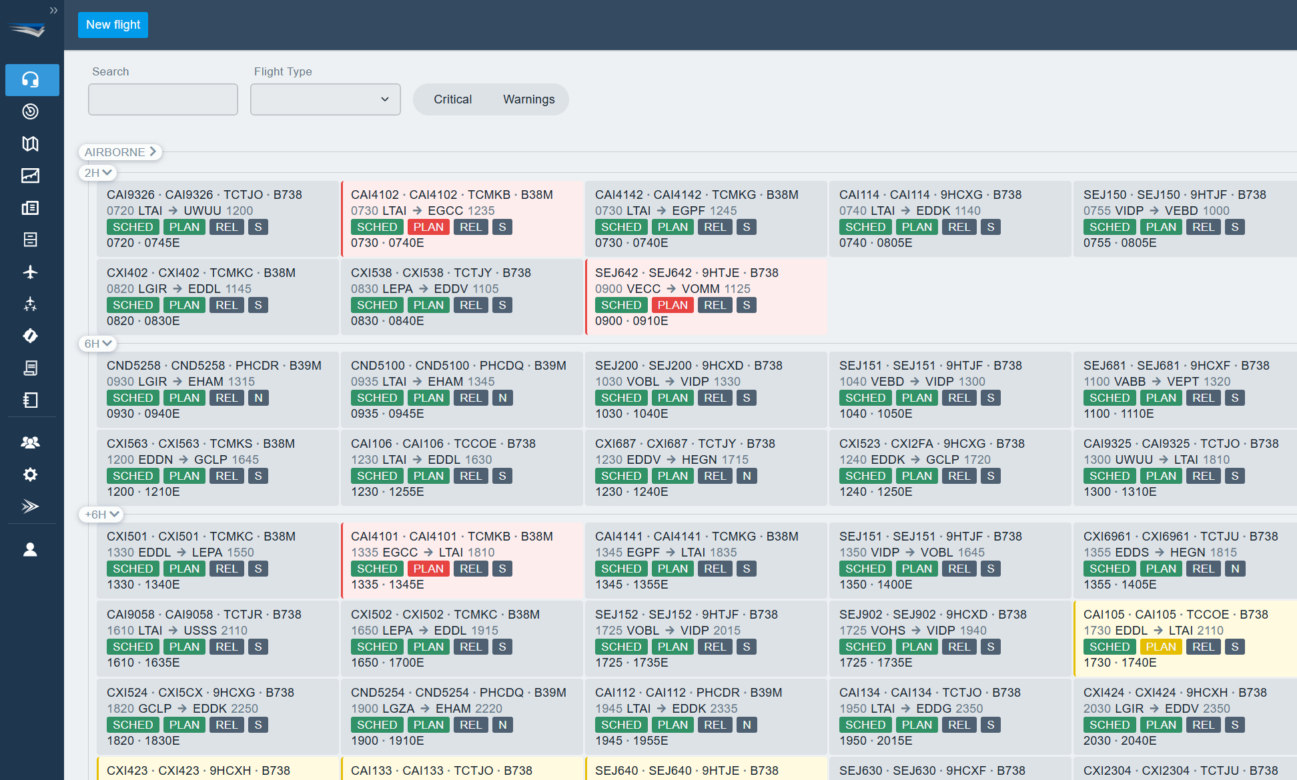
The Management by Exception Dashboard in Jeppesen Dispatch brings the principles of MBE to life. It’s designed to help dispatchers and operations teams focus on what truly matters by surfacing only the flights that require immediate attention. Instead of monitoring every flight equally, the dashboard uses intelligent filtering and real-time alerts to highlight exceptions, enabling teams to prioritize effectively and resolve issues faster.
Key features of the Management by Exception Dashboard
1. Configurable flight cards
Each flight is represented as a customizable card that displays key information, such as departure time, route, weather conditions, and operational status. Dispatchers can configure these cards to show the data most relevant to their workflows.
2. Critical and warning filters
The dashboard includes one-click filters for critical and warning flights, enabling teams to quickly identify and address flights that require immediate action. For example:
- Critical flights: Flights with severe disruptions, such as weather diversions or technical issues.
- Warning flights: Flights with potential issues, such as minor delays or fuel adjustments.
3. 24- or 48-hour views
Teams can toggle between 24-hour and 48-hour views to gain a comprehensive overview of current and upcoming operations. This flexibility helps dispatchers plan ahead and allocate resources effectively.
4. Search and sort by key attributes
The dashboard allows users to search and sort flights by attributes such as aircraft type, departure airport, or operational status. This feature makes it easy to locate specific flights or identify patterns across the fleet.
5. Real-time alerts and notifications
The system provides real-time alerts for changes in flight status, such as delays, airspace restrictions, or weather updates. These notifications ensure that dispatchers are always informed and can respond promptly.
How the dashboard solves operational challenges
1. Improved prioritization
By surfacing only the flights that require attention, the Management by Exception Dashboard helps dispatchers focus on high-priority tasks. This reduces the risk of oversight and ensures that critical issues are addressed promptly.
2. Increased efficiency
Dispatchers no longer need to monitor every flight manually. The dashboard automates routine monitoring, freeing up time for more strategic activities, such as optimizing routes or managing disruptions.
3. Enhanced situational awareness
With real-time data and alerts, the dashboard provides a clear, up-to-date picture of the entire operation. This situational awareness enables teams to make informed decisions quickly and confidently.
4. Reduced workload and stress
Managing hundreds of flights can be overwhelming, but the dashboard’s intelligent filtering and prioritization reduce the cognitive load on dispatchers. This leads to a more manageable workload and a less stressful work environment.
5. Better operational outcomes
By focusing on exceptions, teams can resolve issues faster, minimize delays, and improve overall operational performance. This not only benefits the airline but also enhances the passenger experience.
Real-world example: How it works in practice
Imagine a dispatcher managing a fleet of 150 flights. Without the Management by Exception Dashboard, they would need to monitor all 150 flights equally, scanning for potential issues manually. This approach is time-consuming and prone to errors.
With the dashboard, the dispatcher can:
- Instantly filter for the 10 flights flagged as critical or warning
- Focus on resolving issues such as a weather diversion for Flight A, a fuel adjustment for Flight B, and a delayed departure for Flight C
- Let the remaining 140 routine flights proceed without intervention
This targeted approach ensures that the dispatcher’s time and energy are spent where they’re needed most, leading to faster resolutions and smoother operations.
Why Jeppesen Dispatch’s dashboard stands out
The Management by Exception Dashboard is a core feature of Jeppesen Dispatch, a cloud-native flight planning platform designed for modern aviation operations. What sets it apart is its ability to integrate seamlessly with other operational systems, such as scheduling, maintenance, and crew management tools. This integration ensures that all relevant data is available in one place, enhancing the dashboard’s effectiveness.
Additionally, Jeppesen Dispatch leverages advanced analytics and AI to provide predictive insights, helping teams anticipate and mitigate potential issues before they escalate.
Conclusion: A smarter way to manage operations
The Management by Exception Dashboard is more than just a tool—it’s a smarter way to manage flight operations. By enabling teams to focus on what truly matters, it reduces workload, improves efficiency, and enhances decision-making. For airlines looking to stay competitive in a challenging industry, this dashboard is a must-have.
Ready to transform your operations?
Schedule a demo today to see how Jeppesen Dispatch and its Management by Exception Dashboard can help your team focus on what truly matters.
Explore these resources to learn more about how Management by Exception can revolutionize your flight operations:
- Brochure: Dig deeper into how Management by Exception helps airlines streamline dispatch workflows and focus attention where it matters most.
- Customer success stories: See how airlines like Corendon achieved operational excellence with Jeppesen Dispatch in this customer story.
- Webinar: Watch an in-depth demo of the platform in action.
- Fact sheet: Download a detailed overview of Jeppesen Dispatch’s capabilities.
Have questions?
Contact our team to learn more about how Jeppesen Dispatch can support your operations.
What is Management by Exception (MBE)?
Every day, airline operations teams make thousands of decisions under pressure—but the most important ones are often hidden in a sea of routine flights. Airlines manage hundreds, sometimes thousands, of flights daily, each with its own set of variables—weather, airspace restrictions, crew schedules, and more. Traditionally, dispatchers and operations teams have been tasked with monitoring every flight equally, regardless of whether it’s running smoothly or encountering issues. This approach is not only inefficient but also overwhelming, leading to missed opportunities to address critical problems in a timely manner.
Management by Exception (MBE) is a decision-making framework designed to solve this challenge. Instead of requiring teams to monitor every detail, MBE focuses attention only on deviations from the norm—flights that require intervention or are at risk of disruption. By highlighting exceptions, MBE allows teams to prioritize their efforts, reduce unnecessary workload, and improve overall efficiency.
The problem: Why traditional monitoring falls short
In traditional flight operations, dispatchers are often inundated with data. They must sift through information for every flight, manually identifying issues such as delays, weather disruptions, or regulatory violations. This approach creates several challenges:
- Information overload: Dispatchers are overwhelmed by the sheer volume of data, making it difficult to identify critical issues quickly.
- Inefficient resource allocation: Time and energy are wasted monitoring routine flights that don’t require intervention.
- Delayed responses: Critical issues may go unnoticed or be addressed too late, leading to operational disruptions and increased costs.
These inefficiencies are compounded in large-scale operations, where the number of flights and variables grows exponentially. This is where MBE becomes invaluable.
Why MBE is relevant today
Commercial airlines are under increasing pressure to operate more efficiently while maintaining safety and compliance. Airlines face challenges such as rising fuel costs, stricter environmental regulations, and heightened passenger expectations for on-time performance. In this context, MBE is more relevant than ever because it:
- Reduces operational complexity: By focusing only on exceptions, MBE simplifies decision-making for dispatchers and operations teams.
- Improves responsiveness: Teams can address critical issues faster, minimizing delays and disruptions.
- Enhances efficiency: Resources are allocated where they’re needed most, reducing wasted effort and improving overall productivity.
With the growing adoption of advanced technologies like AI and automation, MBE is no longer just a theoretical framework—it’s a practical, actionable strategy that can be implemented through tools like the Management by Exception Dashboard.
Introducing the Management by Exception Dashboard
The Management by Exception Dashboard in Jeppesen Dispatch brings the principles of MBE to life. It’s designed to help dispatchers and operations teams focus on what truly matters by surfacing only the flights that require immediate attention. Instead of monitoring every flight equally, the dashboard uses intelligent filtering and real-time alerts to highlight exceptions, enabling teams to prioritize effectively and resolve issues faster.
Key features of the Management by Exception Dashboard
1. Configurable flight cards
Each flight is represented as a customizable card that displays key information, such as departure time, route, weather conditions, and operational status. Dispatchers can configure these cards to show the data most relevant to their workflows.
2. Critical and warning filters
The dashboard includes one-click filters for critical and warning flights, enabling teams to quickly identify and address flights that require immediate action. For example:
- Critical flights: Flights with severe disruptions, such as weather diversions or technical issues.
- Warning flights: Flights with potential issues, such as minor delays or fuel adjustments.
3. 24- or 48-hour views
Teams can toggle between 24-hour and 48-hour views to gain a comprehensive overview of current and upcoming operations. This flexibility helps dispatchers plan ahead and allocate resources effectively.
4. Search and sort by key attributes
The dashboard allows users to search and sort flights by attributes such as aircraft type, departure airport, or operational status. This feature makes it easy to locate specific flights or identify patterns across the fleet.
5. Real-time alerts and notifications
The system provides real-time alerts for changes in flight status, such as delays, airspace restrictions, or weather updates. These notifications ensure that dispatchers are always informed and can respond promptly.
How the dashboard solves operational challenges
1. Improved prioritization
By surfacing only the flights that require attention, the Management by Exception Dashboard helps dispatchers focus on high-priority tasks. This reduces the risk of oversight and ensures that critical issues are addressed promptly.
2. Increased efficiency
Dispatchers no longer need to monitor every flight manually. The dashboard automates routine monitoring, freeing up time for more strategic activities, such as optimizing routes or managing disruptions.
3. Enhanced situational awareness
With real-time data and alerts, the dashboard provides a clear, up-to-date picture of the entire operation. This situational awareness enables teams to make informed decisions quickly and confidently.
4. Reduced workload and stress
Managing hundreds of flights can be overwhelming, but the dashboard’s intelligent filtering and prioritization reduce the cognitive load on dispatchers. This leads to a more manageable workload and a less stressful work environment.
5. Better operational outcomes
By focusing on exceptions, teams can resolve issues faster, minimize delays, and improve overall operational performance. This not only benefits the airline but also enhances the passenger experience.
Real-world example: How it works in practice
Imagine a dispatcher managing a fleet of 150 flights. Without the Management by Exception Dashboard, they would need to monitor all 150 flights equally, scanning for potential issues manually. This approach is time-consuming and prone to errors.
With the dashboard, the dispatcher can:
- Instantly filter for the 10 flights flagged as critical or warning
- Focus on resolving issues such as a weather diversion for Flight A, a fuel adjustment for Flight B, and a delayed departure for Flight C
- Let the remaining 140 routine flights proceed without intervention
This targeted approach ensures that the dispatcher’s time and energy are spent where they’re needed most, leading to faster resolutions and smoother operations.
Why Jeppesen Dispatch’s dashboard stands out
The Management by Exception Dashboard is a core feature of Jeppesen Dispatch, a cloud-native flight planning platform designed for modern aviation operations. What sets it apart is its ability to integrate seamlessly with other operational systems, such as scheduling, maintenance, and crew management tools. This integration ensures that all relevant data is available in one place, enhancing the dashboard’s effectiveness.
Additionally, Jeppesen Dispatch leverages advanced analytics and AI to provide predictive insights, helping teams anticipate and mitigate potential issues before they escalate.
Conclusion: A smarter way to manage operations
The Management by Exception Dashboard is more than just a tool—it’s a smarter way to manage flight operations. By enabling teams to focus on what truly matters, it reduces workload, improves efficiency, and enhances decision-making. For airlines looking to stay competitive in a challenging industry, this dashboard is a must-have.
Ready to transform your operations?
Schedule a demo today to see how Jeppesen Dispatch and its Management by Exception Dashboard can help your team focus on what truly matters.
Explore these resources to learn more about how Management by Exception can revolutionize your flight operations:
- Brochure: Dig deeper into how Management by Exception helps airlines streamline dispatch workflows and focus attention where it matters most.
- Customer success stories: See how airlines like Corendon achieved operational excellence with Jeppesen Dispatch in this customer story.
- Webinar: Watch an in-depth demo of the platform in action.
- Fact sheet: Download a detailed overview of Jeppesen Dispatch’s capabilities.
Have questions?
Contact our team to learn more about how Jeppesen Dispatch can support your operations.