
Stop Letting Repetitive Work Drive Up Your Dispatch Labor Costs
A line of storms builds faster than expected, and now your dispatcher has just minutes to react. They move between weather, NOTAM, and routing information while working through the release. While coordinating with the flight crew, they compare options, check alternates, and work through what needs to change before release. All the while, you can’t help but think there must be a better way.
Commercial aviation moves fast, but the dispatch desk often tells a different story. Too often, that decision-making still depends on jumping between systems, piecing together updates, and manually verifying the same operational rules and constraints as part of the planning process.
This repetitive work directly increases workload and consumes dispatcher time for every flight plan. It slows down routine verification and pulls highly trained professionals away from the complex decisions that actually keep your network moving. To lower labor costs and improve operational resilience, you need to eliminate the manual drag from your flight planning workflows.
Do Fragmented Workflows Drag You Down?
When flight planning inputs live in separate systems, your team spends valuable time reconciling data. Dispatchers cross-check departure, destination, and alternate airports by hand. They build manual workarounds for sudden airspace restrictions or temporary aircraft limitations.
Every manual data entry introduces a chance for error, and every repeated check adds avoidable workload to the shift. When conditions change—a sudden storm cell or a closed runway—the workload multiplies. Dispatchers must rebuild scenarios, recalculate options, and coordinate changes across systems. You hire dispatchers to manage complex operational challenges, not to act as human data bridges between legacy software platforms.
Automate Routine Verifications
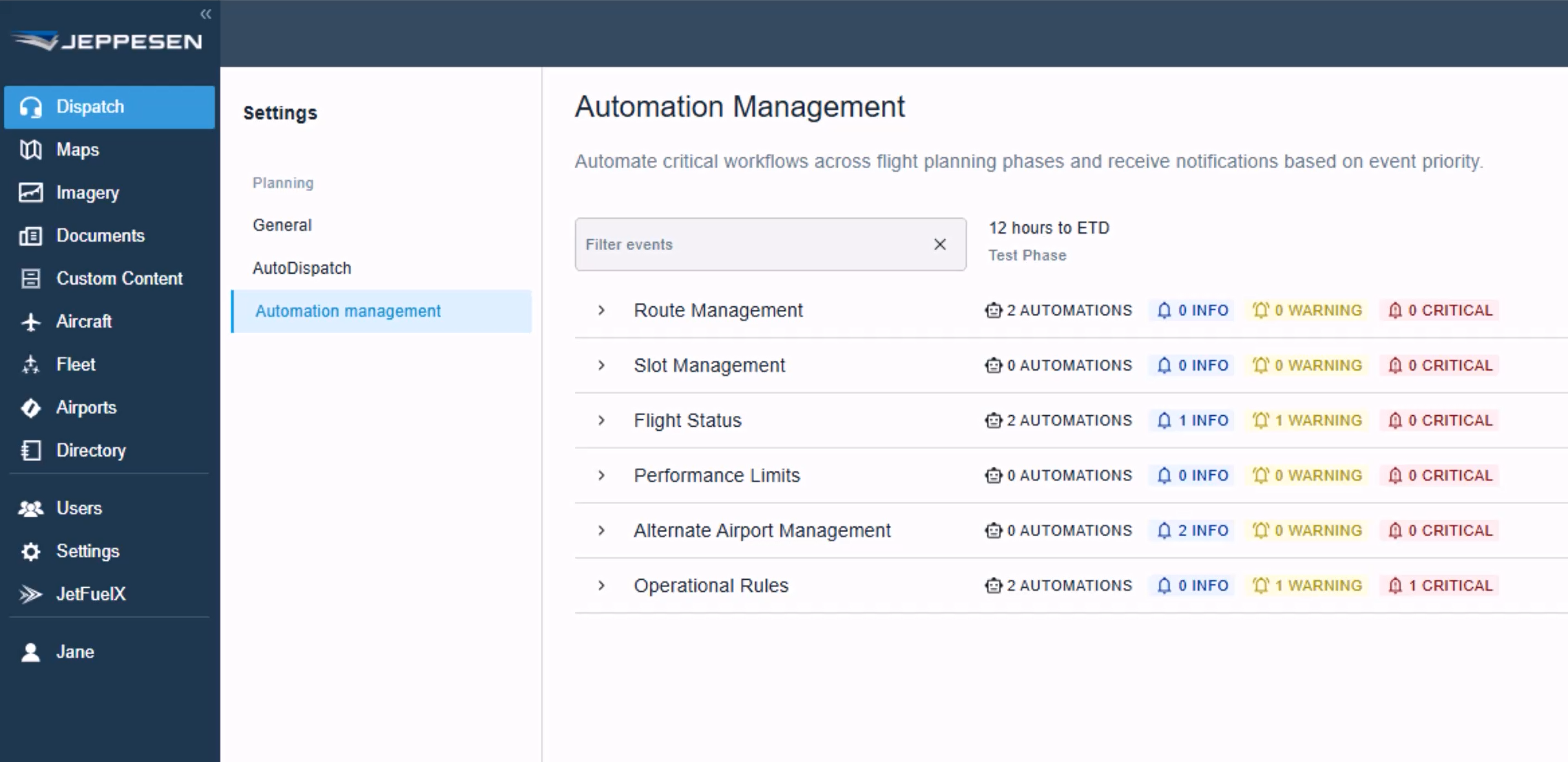
Significantly lower this labor burden by bringing key planning inputs into a single, integrated workflow. Instead of forcing dispatchers to review perfectly stable flight plans, leverage event-based process automation. The system monitors pre-departure conditions in the background and only flags your team when a meaningful trigger event occurs, such as a sudden weather shift or a new route constraint.
You can also automate the most tedious compliance checks. Automated airport suitability checks instantly evaluate your routing options against company minima and aircraft requirements, surfacing issues right on the flight card. Furthermore, dispatchers can configure temporary operational rules with defined start and end times. The system applies these rules automatically across all affected flights. Your team stops writing manual workarounds and starts clearing flights faster.
Smarter Route Planning and Distribution
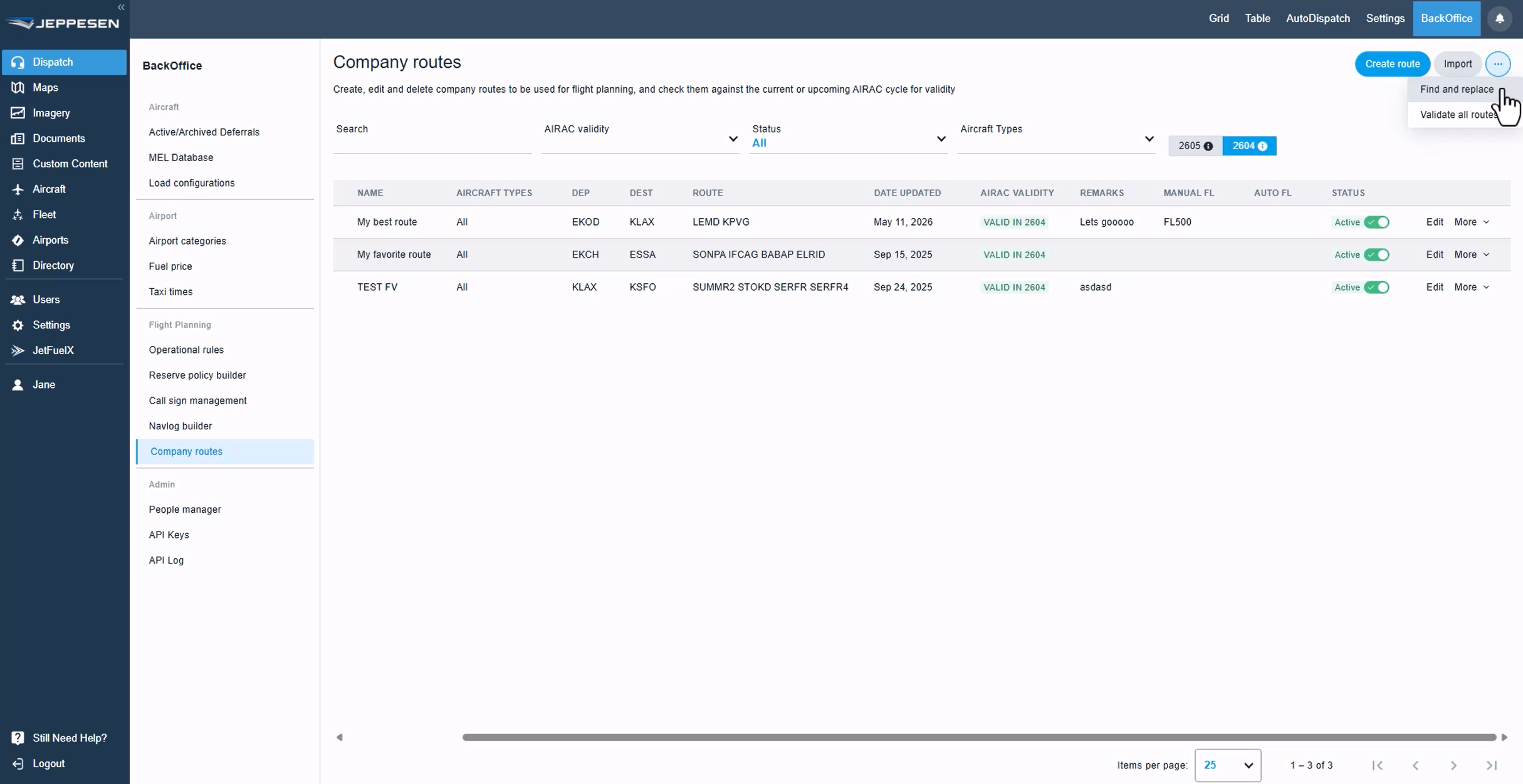
When disruption hits, speed dictates success. Your team needs to evaluate time, altitude, speed, and cost immediately. Modern route planning improvements allow dispatchers to compare scenarios side-by-side without rebuilding the entire flight plan from scratch. They can also apply pre-approved company routes with a single click, cutting out dozens of repetitive planning steps.
This efficiency extends right up to the flight deck. Instead of assembling massive, untargeted briefing packages by hand, advanced briefing settings automatically filter out the noise. Crews receive exactly the NOTAMs, weather data, and charts they need, aligned perfectly with your standard operating procedures.
Free Your Team for High-Value Decisions
Reducing manual, repetitive workflows directly lowers your labor costs per flight plan. An integrated flight planning platform eliminates data re-entry, applies rules consistently, and speeds up routine verification. When you automate the repetitive tasks, you empower your dispatchers to focus on the high-value operational decisions that protect your schedule and maximize efficiency.
If your dispatchers still spend too much time chasing updates, repeating checks, and rebuilding routine work by hand, the operation pays for it in labor, rework, and slower decision-making. Jeppesen Dispatch helps you remove that drag with an integrated workflow that automates routine tasks, improves consistency, and gives your team more time for the decisions that keep flights moving safely and efficiently.
Download this brochure to see how Jeppesen Dispatch can help you reduce manual work across dispatch and build a faster, more resilient operation.
A line of storms builds faster than expected, and now your dispatcher has just minutes to react. They move between weather, NOTAM, and routing information while working through the release. While coordinating with the flight crew, they compare options, check alternates, and work through what needs to change before release. All the while, you can’t help but think there must be a better way.
Commercial aviation moves fast, but the dispatch desk often tells a different story. Too often, that decision-making still depends on jumping between systems, piecing together updates, and manually verifying the same operational rules and constraints as part of the planning process.
This repetitive work directly increases workload and consumes dispatcher time for every flight plan. It slows down routine verification and pulls highly trained professionals away from the complex decisions that actually keep your network moving. To lower labor costs and improve operational resilience, you need to eliminate the manual drag from your flight planning workflows.
Do Fragmented Workflows Drag You Down?
When flight planning inputs live in separate systems, your team spends valuable time reconciling data. Dispatchers cross-check departure, destination, and alternate airports by hand. They build manual workarounds for sudden airspace restrictions or temporary aircraft limitations.
Every manual data entry introduces a chance for error, and every repeated check adds avoidable workload to the shift. When conditions change—a sudden storm cell or a closed runway—the workload multiplies. Dispatchers must rebuild scenarios, recalculate options, and coordinate changes across systems. You hire dispatchers to manage complex operational challenges, not to act as human data bridges between legacy software platforms.
Automate Routine Verifications
Significantly lower this labor burden by bringing key planning inputs into a single, integrated workflow. Instead of forcing dispatchers to review perfectly stable flight plans, leverage event-based process automation. The system monitors pre-departure conditions in the background and only flags your team when a meaningful trigger event occurs, such as a sudden weather shift or a new route constraint.
You can also automate the most tedious compliance checks. Automated airport suitability checks instantly evaluate your routing options against company minima and aircraft requirements, surfacing issues right on the flight card. Furthermore, dispatchers can configure temporary operational rules with defined start and end times. The system applies these rules automatically across all affected flights. Your team stops writing manual workarounds and starts clearing flights faster.
Smarter Route Planning and Distribution
When disruption hits, speed dictates success. Your team needs to evaluate time, altitude, speed, and cost immediately. Modern route planning improvements allow dispatchers to compare scenarios side-by-side without rebuilding the entire flight plan from scratch. They can also apply pre-approved company routes with a single click, cutting out dozens of repetitive planning steps.
This efficiency extends right up to the flight deck. Instead of assembling massive, untargeted briefing packages by hand, advanced briefing settings automatically filter out the noise. Crews receive exactly the NOTAMs, weather data, and charts they need, aligned perfectly with your standard operating procedures.
Free Your Team for High-Value Decisions
Reducing manual, repetitive workflows directly lowers your labor costs per flight plan. An integrated flight planning platform eliminates data re-entry, applies rules consistently, and speeds up routine verification. When you automate the repetitive tasks, you empower your dispatchers to focus on the high-value operational decisions that protect your schedule and maximize efficiency.
If your dispatchers still spend too much time chasing updates, repeating checks, and rebuilding routine work by hand, the operation pays for it in labor, rework, and slower decision-making. Jeppesen Dispatch helps you remove that drag with an integrated workflow that automates routine tasks, improves consistency, and gives your team more time for the decisions that keep flights moving safely and efficiently.
Download this brochure to see how Jeppesen Dispatch can help you reduce manual work across dispatch and build a faster, more resilient operation.