

Get Better Route Optimization Without a System Replacement
An advanced optimization layer that runs alongside the flight planning system your team already uses, with no migration, no desktop installs, and no rip-and-replace.
When airlines look for savings in route planning, the first instinct is often to assume the planning system itself needs to change. Better optimization starts to sound like a platform project: new software, new contract, implementation, training, and a long transition before any value shows up.
That is a major reason optimization projects get delayed. A full system replacement is disruptive and expensive, and even a clear savings opportunity can feel too heavy to pursue if it requires a multi-quarter migration.
But improving route optimization does not require replacing the planning system your team already trusts.
Add optimization without changing the system
Jeppesen Dispatch Analytics takes a different approach. It adds an optimization layer on top of your existing flight planning system, so you can identify lower-cost routing opportunities without starting over.
That means you can keep the planning environment your dispatch team already knows while still finding fuel burn and enroute charge savings that may be left on the table.
It works whether you use Jeppesen Dispatch or any other flight planning system.
How it works
The connection is intentionally lightweight.
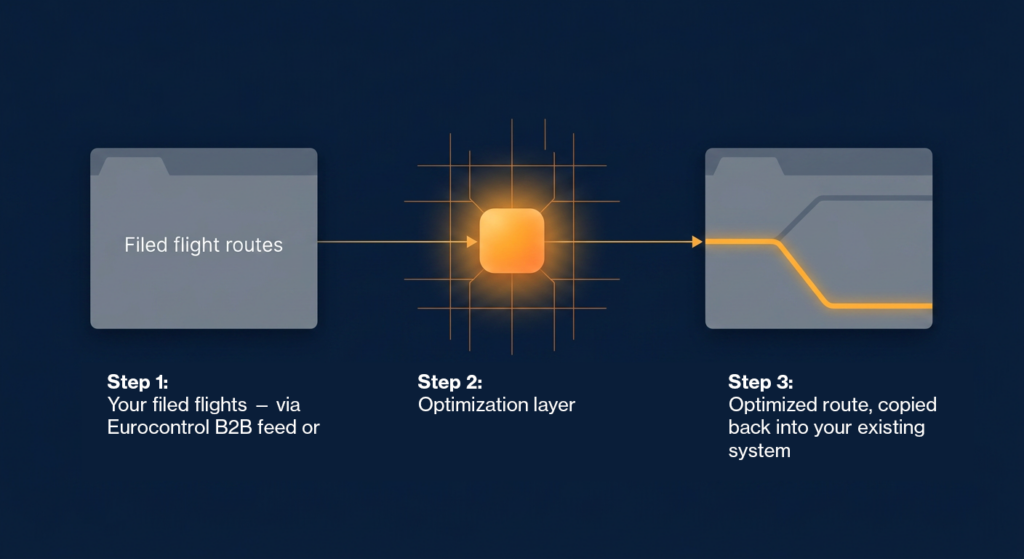
Analytics ingests filed flights through the Eurocontrol B2B feed, allowing it to evaluate the routes you are already flying without deep integration into your planning software.
There is nothing to install on the desktop. Analytics is cloud-based and runs in the browser. If schedule data is needed, it can be uploaded as a CSV. There are no servers to stand up and no client rollout across the operation.
The output is simple to use. Analytics returns an optimized route as a copyable string that fits into the workflow dispatchers already use. There is no new release process and no change to the filing environment.
Dispatcher control stays intact
Analytics does not remove the dispatcher from the loop; it surfaces a more efficient route and shows the difference in fuel burn and enroute charges versus the flight that was filed. The final filing decision remains human. That matters because the goal is not automation for its own sake; the goal is to give dispatchers better options without changing the tools or processes they already rely on.
Savings Appear in days, not quarters
Because nothing gets replaced, the usual barriers to an optimization project fall away. There is no migration risk. There is no need to wait for a new platform rollout. And there is no reason value has to stay theoretical until next year.
In one month, a European low-cost carrier identified over €4.8 million in savings potential by running its filed flights through Analytics without touching its planning system. The plans stayed in place. The opportunity was found by re-examining flights already filed and identifying where a more fuel-efficient trajectory was available.
That is the advantage of an overlay approach: you can measure the opportunity before committing to a larger change.
Put your own filed flights through it
The real question is not whether your planning system should be replaced; it’s how much recoverable savings is already sitting in the flights you are filing today. Analytics is available on its own or as an add-on to Jeppesen Dispatch, so it fits whether you are running a third-party planner or extending the system you already have.
Read the brochure to see how Analytics connects to your existing system, then request a demo and put your own filed flights through it.
An advanced optimization layer that runs alongside the flight planning system your team already uses, with no migration, no desktop installs, and no rip-and-replace.
When airlines look for savings in route planning, the first instinct is often to assume the planning system itself needs to change. Better optimization starts to sound like a platform project: new software, new contract, implementation, training, and a long transition before any value shows up.
That is a major reason optimization projects get delayed. A full system replacement is disruptive and expensive, and even a clear savings opportunity can feel too heavy to pursue if it requires a multi-quarter migration.
But improving route optimization does not require replacing the planning system your team already trusts.
Add optimization without changing the system
Jeppesen Dispatch Analytics takes a different approach. It adds an optimization layer on top of your existing flight planning system, so you can identify lower-cost routing opportunities without starting over.
That means you can keep the planning environment your dispatch team already knows while still finding fuel burn and enroute charge savings that may be left on the table.
It works whether you use Jeppesen Dispatch or any other flight planning system.
How it works
The connection is intentionally lightweight.
Analytics ingests filed flights through the Eurocontrol B2B feed, allowing it to evaluate the routes you are already flying without deep integration into your planning software.
There is nothing to install on the desktop. Analytics is cloud-based and runs in the browser. If schedule data is needed, it can be uploaded as a CSV. There are no servers to stand up and no client rollout across the operation.
The output is simple to use. Analytics returns an optimized route as a copyable string that fits into the workflow dispatchers already use. There is no new release process and no change to the filing environment.
Dispatcher control stays intact
Analytics does not remove the dispatcher from the loop; it surfaces a more efficient route and shows the difference in fuel burn and enroute charges versus the flight that was filed. The final filing decision remains human. That matters because the goal is not automation for its own sake; the goal is to give dispatchers better options without changing the tools or processes they already rely on.
Savings Appear in days, not quarters
Because nothing gets replaced, the usual barriers to an optimization project fall away. There is no migration risk. There is no need to wait for a new platform rollout. And there is no reason value has to stay theoretical until next year.
In one month, a European low-cost carrier identified over €4.8 million in savings potential by running its filed flights through Analytics without touching its planning system. The plans stayed in place. The opportunity was found by re-examining flights already filed and identifying where a more fuel-efficient trajectory was available.
That is the advantage of an overlay approach: you can measure the opportunity before committing to a larger change.
Put your own filed flights through it
The real question is not whether your planning system should be replaced; it’s how much recoverable savings is already sitting in the flights you are filing today. Analytics is available on its own or as an add-on to Jeppesen Dispatch, so it fits whether you are running a third-party planner or extending the system you already have.
Read the brochure to see how Analytics connects to your existing system, then request a demo and put your own filed flights through it.