
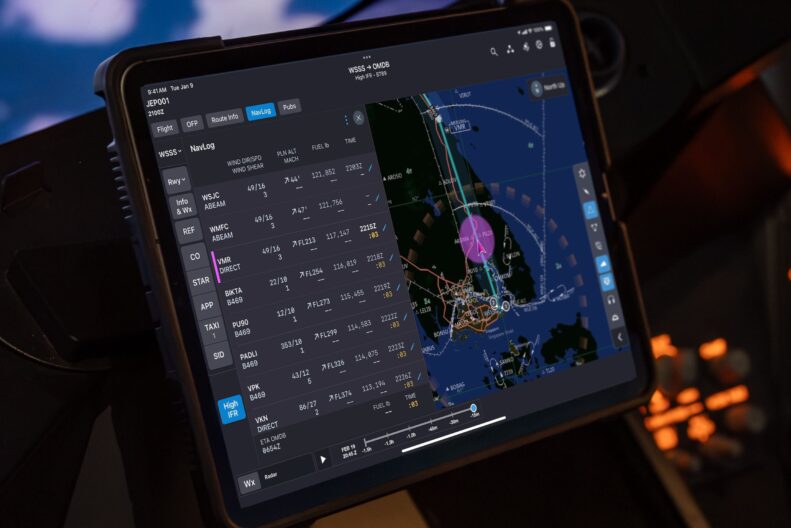
What is an integrated EFB?
Commercial aviation has come a long way since the days of lugging heavy flight bags stuffed with paper charts onto the flight deck. But as technology has advanced, there’s a next frontier that airlines are adopting to stay competitive, compliant and execute flawless flights in a rapidly evolving industry—an integrated EFB ecosystem.
A truly integrated EFB connects flight operations, pilots, dispatchers and back-office personnel through seamless data integration and workflow automation. Unlike traditional EFBs that primarily serve as a flight deck tool for navigation, an integrated EFB extends beyond the flight deck to connect pilots with the rest of flight operations, ensuring information sharing across all aviation stakeholders.
From EFB to Integrated EFB—Why do airlines need a new approach?
Traditional EFBs were revolutionary for their time; they replaced manual charts and improved efficiency at the flight deck level. However, today’s EFBs have their limitations. Pilots often toggle between multiple disparate applications, causing unnecessary complexity. Operational inefficiencies crop up because these isolated systems fail to communicate critical data with other key stakeholders across flight operations, such as dispatchers or the maintenance team.
An integrated EFB changes that equation. It combines navigation, briefing, nav logging, flight efficiency improvements, and real-time operational insights into a single, scalable application, and acts as a much-needed bridge to close communication gaps across flight operations.
Integrated vs. Interfaced EFBs—A Critical Distinction
It’s worth noting that not all so-called integrated EFB solutions are created equal, and the distinction between integrated and interfaced means the difference between solving your EFB ecosystem’s limitations or multiplying them. Today, most EFBs are actually interfaced solutions, where apps and systems are loosely connected using surface-level links or middleware. These connections often fail to resolve today’s inefficiencies due to issues like data duplication, compatibility errors, or excessive system toggling.
A true integrated EFB, on the other hand, works as a centralized EFB hub where all workflows and data streams are genuinely unified. This distinction ensures smoother operations, better scalability, and long-term operational efficiency.
Advantages of an Integrated EFB for Airlines
An integrated EFB offers a host of advantages that work to transform airline’s and cargo carrier’s digital flight operations into resilient, scalable ecosystems that meet their needs at any stage of maturity. By streamlining workflows, reducing manual tasks, and enhancing data accuracy, an integrated EFB provides airlines with a competitive edge. Let’s explore the key advantages integrated EFBs are delivering to operators today:
1. Reduced Operational Costs
With features like digitized flight briefings, fuel optimization advisories, and automated workflows, integrated EFBs drastically lower the costs associated with paper processes, fuel burn, and manual workflows.
2. Improved Flight Operations Efficiency
By creating a single source of truth for critical operational data, integrated EFBs allow for faster, more accurate decision-making across an airline’s ecosystem. Pilots, dispatchers, and backend teams can collaborate effortlessly, thanks to automated information sharing.
3. Enhanced Pilot Workflow
One of the primary benefits of a connected EFB is its role in minimizing cockpit complexity. With a user-friendly interface and fully integrated tools, pilots can execute their tasks more efficiently, leaving them with more headspace to focus on safety and situational awareness during the flight.
4. Meeting Regulatory and Sustainability Goals
With growing regulatory requirements, such as ICAO and CORSIA guidelines, airlines need solutions that ensure compliance without adding complexity. Integrated EFBs simplify compliance management by providing audit-ready reports and real-time tracking features for metrics such as fuel emissions. Additionally, their sustainability features, like reduced carbon footprints from better fuel management, help airlines achieve emission reduction goals with ease.
5. ROI and Competitiveness
Airlines operate on razor-thin margins. The ROI of an Integrated EFB emerges in multiple ways—from fuel savings, reduced maintenance costs, and lower paper expenses to streamlined operations. Over time, integrating such advanced solutions positions airlines as industry leaders capable of attracting environmentally conscious passengers and meeting stakeholder expectations.
Start your journey toward flawless flight with FliteDeck Pro
The industry is not just digitizing; it’s integrating. In today’s landscape, an integrated EFB ecosystem is a crucial step forward in enhancing efficiency, staying compliant, and achieving flawless flight in an increasingly complex landscape. For airlines ready to streamline operations, reduce costs, and make data-driven decisions, there’s Jeppesen FliteDeck Pro, the only truly integrated EFB offering available today.
Combining navigation, tailored charts, electronic briefing, and fuel efficiency tools into a single, seamless experience, FliteDeck Pro provides an uninterrupted workflow for pilots in the app they already know and trust.
Whether you’re just beginning your digital transformation or are ready to fully optimize flight operations, Jeppesen’s integrated EFB ecosystem eliminates paper-dependent workflows and unifies disparate flight ops systems into a single, intuitive platform.
The result? A smarter, more efficient way to manage flight operations that reduces complexities, boosts sustainability and enhances safety.
Contact our sales team to see it in action or download our FliteDeck Pro capability guide to learn more about the modules and solutions behind Jeppesen’s integrated EFB ecosystem.
→ READ NEXT: Unifying Flight Operations: The criticality of integrating the commercial flight deck
Commercial aviation has come a long way since the days of lugging heavy flight bags stuffed with paper charts onto the flight deck. But as technology has advanced, there’s a next frontier that airlines are adopting to stay competitive, compliant and execute flawless flights in a rapidly evolving industry—an integrated EFB ecosystem.
A truly integrated EFB connects flight operations, pilots, dispatchers and back-office personnel through seamless data integration and workflow automation. Unlike traditional EFBs that primarily serve as a flight deck tool for navigation, an integrated EFB extends beyond the flight deck to connect pilots with the rest of flight operations, ensuring information sharing across all aviation stakeholders.
From EFB to Integrated EFB—Why do airlines need a new approach?
Traditional EFBs were revolutionary for their time; they replaced manual charts and improved efficiency at the flight deck level. However, today’s EFBs have their limitations. Pilots often toggle between multiple disparate applications, causing unnecessary complexity. Operational inefficiencies crop up because these isolated systems fail to communicate critical data with other key stakeholders across flight operations, such as dispatchers or the maintenance team.
An integrated EFB changes that equation. It combines navigation, briefing, nav logging, flight efficiency improvements, and real-time operational insights into a single, scalable application, and acts as a much-needed bridge to close communication gaps across flight operations.
Integrated vs. Interfaced EFBs—A Critical Distinction
It’s worth noting that not all so-called integrated EFB solutions are created equal, and the distinction between integrated and interfaced means the difference between solving your EFB ecosystem’s limitations or multiplying them. Today, most EFBs are actually interfaced solutions, where apps and systems are loosely connected using surface-level links or middleware. These connections often fail to resolve today’s inefficiencies due to issues like data duplication, compatibility errors, or excessive system toggling.
A true integrated EFB, on the other hand, works as a centralized EFB hub where all workflows and data streams are genuinely unified. This distinction ensures smoother operations, better scalability, and long-term operational efficiency.
Advantages of an Integrated EFB for Airlines
An integrated EFB offers a host of advantages that work to transform airline’s and cargo carrier’s digital flight operations into resilient, scalable ecosystems that meet their needs at any stage of maturity. By streamlining workflows, reducing manual tasks, and enhancing data accuracy, an integrated EFB provides airlines with a competitive edge. Let’s explore the key advantages integrated EFBs are delivering to operators today:
1. Reduced Operational Costs
With features like digitized flight briefings, fuel optimization advisories, and automated workflows, integrated EFBs drastically lower the costs associated with paper processes, fuel burn, and manual workflows.
2. Improved Flight Operations Efficiency
By creating a single source of truth for critical operational data, integrated EFBs allow for faster, more accurate decision-making across an airline’s ecosystem. Pilots, dispatchers, and backend teams can collaborate effortlessly, thanks to automated information sharing.
3. Enhanced Pilot Workflow
One of the primary benefits of a connected EFB is its role in minimizing cockpit complexity. With a user-friendly interface and fully integrated tools, pilots can execute their tasks more efficiently, leaving them with more headspace to focus on safety and situational awareness during the flight.
4. Meeting Regulatory and Sustainability Goals
With growing regulatory requirements, such as ICAO and CORSIA guidelines, airlines need solutions that ensure compliance without adding complexity. Integrated EFBs simplify compliance management by providing audit-ready reports and real-time tracking features for metrics such as fuel emissions. Additionally, their sustainability features, like reduced carbon footprints from better fuel management, help airlines achieve emission reduction goals with ease.
5. ROI and Competitiveness
Airlines operate on razor-thin margins. The ROI of an Integrated EFB emerges in multiple ways—from fuel savings, reduced maintenance costs, and lower paper expenses to streamlined operations. Over time, integrating such advanced solutions positions airlines as industry leaders capable of attracting environmentally conscious passengers and meeting stakeholder expectations.
Start your journey toward flawless flight with FliteDeck Pro
The industry is not just digitizing; it’s integrating. In today’s landscape, an integrated EFB ecosystem is a crucial step forward in enhancing efficiency, staying compliant, and achieving flawless flight in an increasingly complex landscape. For airlines ready to streamline operations, reduce costs, and make data-driven decisions, there’s Jeppesen FliteDeck Pro, the only truly integrated EFB offering available today.
Combining navigation, tailored charts, electronic briefing, and fuel efficiency tools into a single, seamless experience, FliteDeck Pro provides an uninterrupted workflow for pilots in the app they already know and trust.
Whether you’re just beginning your digital transformation or are ready to fully optimize flight operations, Jeppesen’s integrated EFB ecosystem eliminates paper-dependent workflows and unifies disparate flight ops systems into a single, intuitive platform.
The result? A smarter, more efficient way to manage flight operations that reduces complexities, boosts sustainability and enhances safety.
Contact our sales team to see it in action or download our FliteDeck Pro capability guide to learn more about the modules and solutions behind Jeppesen’s integrated EFB ecosystem.